November 15, 2026 · 9 min read
How Often Should You Change Your Oil? Start With Your Owner's Manual
By the Newby's Automotive team · Family-owned in Henderson, NV since 2000
In this article
By the Newby's Automotive Center team. Published: November 15, 2026.
How often should you change your oil? It depends on your vehicle, the oil it uses and how you drive, so the right answer is the interval in your owner's manual, not a fixed mileage. Newby's oil change and scheduled maintenance service in Henderson follows your vehicle's maintenance schedule.
Why isn't there one mileage for every car?
Because the interval depends on the make and model, the type of oil and the way the car is driven. Toyota lists those same factors, and notes that it was once common to recommend changing the oil every 3,000 miles or every three months. With advances in engine technology and synthetic oils, Toyota says many newer vehicles can now go 5,000 to 7,500 miles, or even up to 15,000 miles, between oil changes.
AAA gives a different range for the same reason: automakers typically recommend intervals of between 5,000 and 10,000 miles, if they recommend set intervals at all. The ranges differ because the cars, engines and oils differ, so no single number can be right for every vehicle. Use the ranges to see how much the answer can vary, not to set your own schedule.
What does the old 3,000-mile rule get right and wrong?
It was reasonable advice when it started, but it no longer fits most cars. This table compares common rules of thumb with what AAA and Toyota say.
| Rule of thumb | What the sources say |
|---|---|
| Change the oil every 3,000 miles, no matter what | AAA says that advice was accurate at the time but is out of date for most of today's cars, because oils and engines have improved. |
| Mileage is the only thing that counts | AAA says virtually every manufacturer recommends changing the oil at least once a year, regardless of mileage. Toyota says oil also breaks down over time, whether or not the car is driven. |
| More oil changes can only help | AAA says changing the oil too often will not damage the engine, but it will not do it any good either. |
| Every driver is a "normal" driver | AAA says severe service, such as mainly short trips, very hot, cold or dusty climates, sustained stop-and-go driving, or heavy loads and towing, calls for the more frequent schedule. |
How do you find the interval for your car?
Start with the sources written for your vehicle, in this order:
- The maintenance section of your owner's manual. AAA says to always defer to it. If you do not have a manual, AAA suggests checking the automaker's website, and warns that forums and social media may not be accurate.
- The oil life monitor or maintenance reminder, if your car has one. AAA says to heed it. Its reminder systems typically cover oil changes and tires, and some automakers show a code on the dash that the manual explains.
- Your maintenance schedule, normal or severe. Many manuals list two. Which one applies depends on how you drive (see the next section).
- A technician or service adviser. AAA recommends asking a trusted mechanic or service adviser if you are unsure.
Write the result down, along with the date and mileage of your last oil change. That makes the next one easy to plan.

What counts as severe driving, and does it apply in Henderson?
Severe driving is a set of conditions that is harder on the oil than ordinary use, and the exact definition varies by automaker. AAA lists four typical ones:
- Mainly short trips of 5 miles or less.
- Very hot, cold or dusty climates.
- Sustained stop-and-go driving.
- Carrying heavy loads or towing a trailer.
CalRecycle, a California state agency, publishes a similar list on its oil change interval page. It says normal driving does not include extreme heat of more than 90 degrees, repeated short trips of less than five miles, extensive idling or stop-and-go traffic, or towing a trailer or hauling heavy materials. It adds that if you drive in any one of these conditions in a typical week, you could be driving in severe conditions and may need to change your oil more often.
Henderson summers are hot, so the heat item may apply to many local drivers, and your usual routes may include short or stop-and-go trips. Your manual's definition decides which schedule applies. If it is not clear, ask the shop.

Do you still need to watch the interval if your car has an oil life monitor?
Yes, you still need to act on it. AAA says to heed the monitor if your car has one, and says that if the oil-life indicator light comes on, you should schedule an oil change as soon as possible to prevent engine damage.
AAA notes that some advanced monitors analyze driving history and operating conditions, and that under favorable conditions a car might travel up to 16,000 miles before one calls for a change. If the system detects heavy-duty operation, it shortens the interval. AAA also says many owner's manuals no longer describe normal and severe schedules separately, because the monitor accounts for the difference automatically.
What are the signs you may be due for an oil change?
Signs help you catch a problem early, but they are not a way to set your schedule. Toyota lists darkened oil, increased engine noise, excessive exhaust smoke, a burnt oil smell and a noticeable dip in fuel efficiency as signs you may be overdue. Toyota adds that a burning smell inside the car could point to a leak or an overheating engine, and needs prompt investigation.
Newby's service page lists these among the signs you may need this service: a routine oil change is due, a 30K, 60K or 90K service interval is approaching, or the maintenance-required light is on. If another warning light is on, our guide to what dashboard warning lights mean can help you decide how urgent it is.
Should you check the oil level between changes?
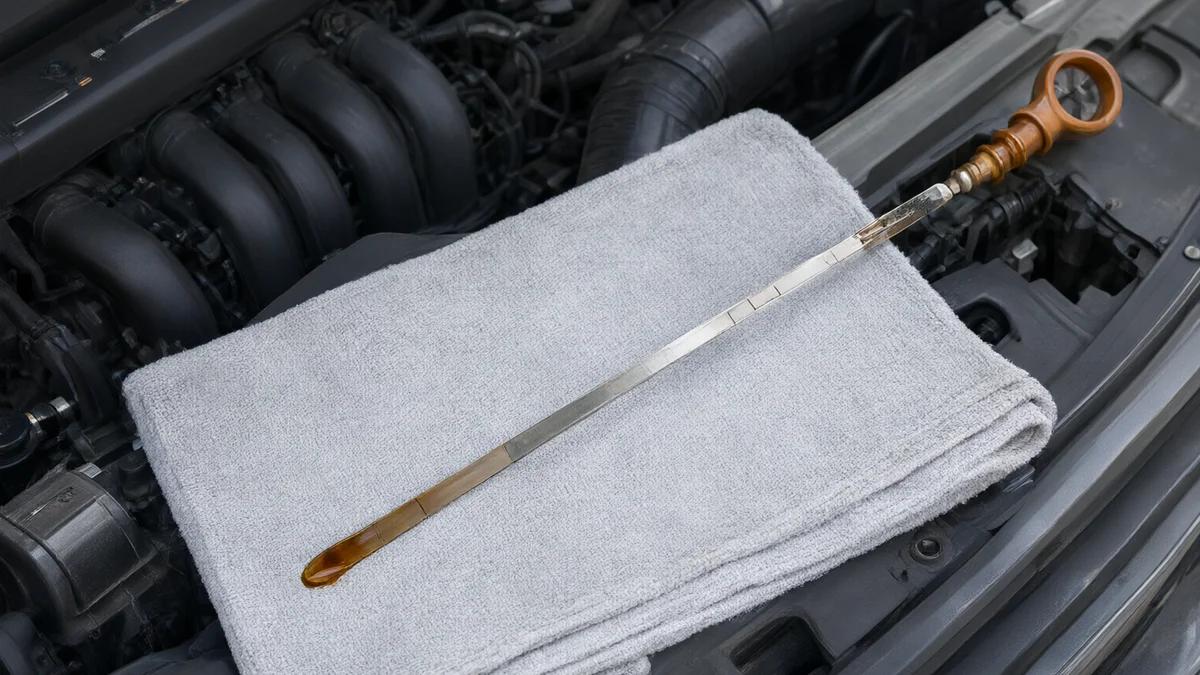
Yes. AAA recommends checking the oil level monthly and topping it up as needed, especially as a car ages and may burn some oil between changes. If you are not sure where the dipstick is, your owner's manual shows you. If the level keeps dropping, or you see oil under the car, have it inspected rather than only adding more.
What happens at an oil change visit at Newby's?
Newby's service page says the shop follows your vehicle's exact maintenance schedule and only recommends what it actually needs. The oil change and maintenance service includes oil and filter changes (conventional and synthetic), 30/60/90/120K mile services, fluid services and flushes, filter replacement and a multi-point maintenance inspection. For background on why the service matters, read how routine oil changes help prevent engine wear.
Before you call or book, have these ready:
- Your vehicle's year, make and model.
- Your current mileage and the date and mileage of your last oil change.
- Whether a maintenance or oil light is on, or your monitor shows a percentage or message.
- A short description of how you drive: mostly short trips, stop-and-go traffic, towing, or longer drives.
Frequently asked questions
Can I go over my oil change interval?
AAA says intervals are not exact, and you can go a little over the recommended limit. It also says that is not a plan: if the oil-life light comes on, schedule the change as soon as possible, and an extended time without a change can hurt engine performance.
Do I need an oil change if I barely drive?
Generally, yes. The general guidance from AAA is to change the oil once a year even if you do not reach the minimum number of miles, because engine oil can go bad if the car sits. Toyota likewise says oil breaks down over time whether or not the car is driven. Your vehicle's own time-based schedule in the owner's manual comes first, so follow it if it differs.
Is it bad to change my oil too often?
It will not damage the engine, according to AAA, but it will not help it, and it costs you time and money. Following your manual avoids both too many and too few changes.
How do I know which oil my car needs?
Your owner's manual lists it. AAA says the oil should fit the Society of Automotive Engineers (SAE) viscosity grade for your engine and meet performance standards from boards such as the American Petroleum Institute (API) and the International Lubricant Specification Advisory Committee (ILSAC). A repair shop can also tell you your vehicle's recommended specifications.
Schedule your oil change in Henderson
If you are due, or you are not sure whether you are, call Newby's Automotive Center at (702) 897-9667 or request an appointment. Ask which schedule applies to your vehicle.
Sources
- Toyota. How To Tell If You May Need An Oil Change. https://www.toyota.com/knowledge-center/car-maintenance/signs-oil-change (last updated October 1, 2026; retrieved 2026-11-09)
- AAA Magazines (Peter Bohr, AAA Automotive Correspondent, May 19, 2020). How often should you change your car's engine oil? https://www.ace.aaa.com/content/ace-www/en/publications/auto/drive-smart/how-often-should-you-change-engine-oil.html (retrieved 2026-11-09)
- AAA Automotive. How Often Should You Change Your Oil? https://www.aaa.com/autorepair/articles/how-often-should-you-change-your-oil (retrieved 2026-11-09)
- AAA Exchange. Car Care Basics: In-Vehicle Maintenance Reminder Systems vs. The Owner's Manual. https://exchange.aaa.com/adulting-with-aaa/car-care/the-basics/ (retrieved 2026-11-09)
- CalRecycle. Recommended Oil Change Interval ("Check Your Number"). https://www2.calrecycle.ca.gov/UsedOil/ChangeInterval (retrieved 2026-11-09)
- Newby's Automotive Center. Oil Changes & Scheduled Maintenance in Henderson, NV. https://www.newbysautomotive.com/services/oil-change-maintenance (retrieved 2026-11-09)
About the author
Newby's Automotive Center
This article is published by the team at Newby's Automotive Center, a family-owned auto repair shop on American Pacific Dr in Henderson, NV since 2000. Our ASE-certified technicians service all makes and models and have earned 1,436 verified reviews at 4.9 stars.
- ASE Certified
- NAPA Affiliated
- AAA Accredited
- BBB Rated